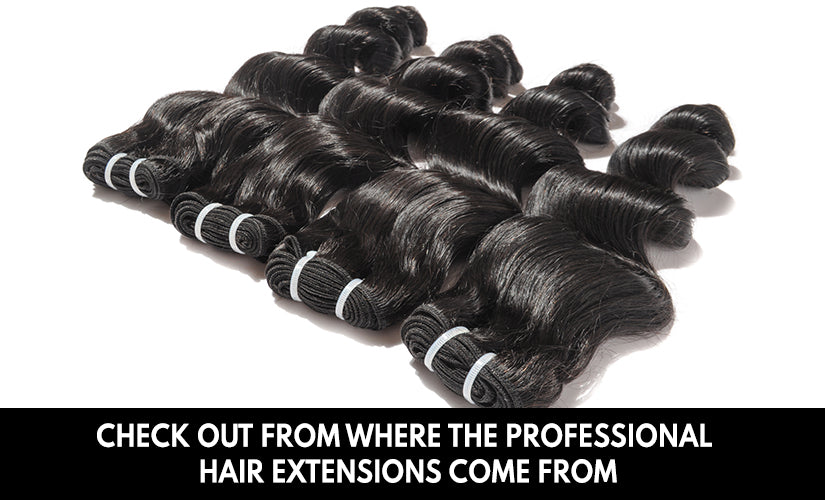
“Where Do Hair Extensions Come From? A Sourcing Guide”
Not all hair extensions are sourced the same way, and where the hair comes from has a direct impact on its quality. Here’s how genuine, professional-grade hair extensions make their way from origin to salon.
Temple donations in South India
Much of the world’s highest-quality virgin Remy hair comes from temples in South India, where devotees offer their hair as part of a centuries-old spiritual practice filled with gratitude. The hair is shaved rather than cut — shaving preserves the full strand from root to tip, while cutting removes the strand partway along its length and loses that root-to-tip integrity. This is what allows the hair to be classified as genuine virgin Remy. While it isn’t traced to a specific individual’s identity, it’s understood as part of the practice that each bundle comes from a single donor, not a blend of multiple people’s hair. Auction proceeds go directly toward funding temple charitable programs — free meals, education, and infrastructure for local communities.
A natural texture advantage
South Indian hair also tends to sit in a middle ground texturally — neither as thick nor as fine as some other hair types. Much of it comes from women who follow traditional hair care routines, including regular coconut oil application and far less chemical processing than is typical in more urban settings, which contributes to hair that’s naturally healthy and in good condition well before it’s ever processed into extensions.
Watch for misused terms
There’s a lot of misinformation in the industry about what “virgin Remy” actually means, with some sellers using the term loosely to describe lower-grade hair. True virgin Remy has two non-negotiable qualities: single-donor origin, and no chemical processing — and it’s also, as a natural result, notably healthy hair. If either of the first two is missing, it isn’t virgin Remy, no matter what the listing says.